A lifesaving risk assessment technology for the 21st Century
What if…
…there were a way to provide an early risk marker for breast cancer?
…there were a better screening approach that combined multiple tests, including a technology that reflects the early cancerous process itself?
…there were a technology that could find areas of inflammation in advance of symptoms?
…there were a tool that had the possibility to find the true cause of your pain so that you could get the treatment you need?
…there were a test that could give an athlete an edge in sports injury management?
That technology is here, and it’s called clinical thermography.
Welcome to the Eagle Institute of Clinical Thermology. The institute is founded on the principle that every woman should have access to this lifesaving technology. We are here to support offices, hospitals, and imaging centers in reaching this goal. Our mission is focused on:
- Increasing awareness of this lifesaving technology
- Promoting and engaging in research
- Providing educational resources for doctors and technicians
- Providing professional interpretation and reporting of clinical thermograms
If you are a physician, we are here to help you care for your patients. Computerized infrared imaging may aid you in the differential diagnosis process. The technology is designed to complement your examination procedures and assist you in the treatment process. Computerized infrared imaging is FDA approved as an adjunctive procedure.
What is Thermography?
Thermography, or infrared imaging, entails the use of specialized cameras that are sensitive to the detection of electromagnetic energy (light) in the infrared wavelengths (heat). As such, these imagers serve as a remote sensing system; nothing touches or harms the object under investigation. When the camera’s detectors sense the incoming infrared heat an electrical signal is produced that generates a visible image display.
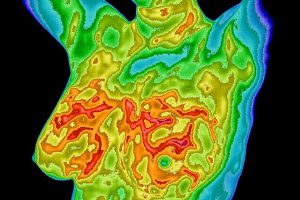
Saving Lives
The single most important marker of high risk for developing breast cancer.
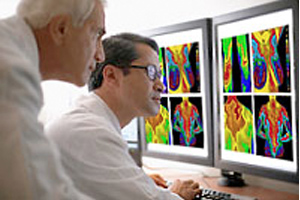
Research
As part of a multimodal approach, 95% of early stage cancers will be detected.
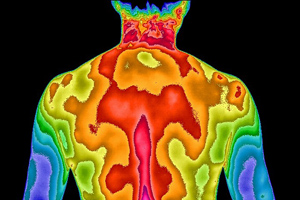
Finding the Cause
Helping you and professional athletes alike find the cause of their pain and disability.